
Bleeding Gums: When to Panic and When to Relax
- Dr TCN Buleni
- May 28
- 5 min read

Your gums bled when you brushed this morning. Now you are sitting here wondering whether that is something to be concerned about or whether it is just one of those things that happens.
Dr. Buleni breaks it down clearly because the answer is not the same for everyone, and knowing the difference matters.
What Healthy Gums Actually Look Like
Before getting into when to worry, it helps to know what you are aiming for. Healthy gums are pink and firm. Not too red, not too pale. Dr. Buleni also makes an important distinction that often confuses patients:
"I'm not talking about hyperpigmentation or melanin. I have it myself — you can see it when I smile. That is normal. I'm talking about gums that are extremely red, visibly inflamed, and look like they are just about to bleed."
Melanin pigmentation in the gums is completely normal, particularly for people of colour, and has nothing to do with gum disease. The redness that signals a problem is a different thing entirely... it is inflammation, and it means the tissue is under bacterial attack.
When You Should Be Concerned
Dr. Buleni is direct about the signs that should send you to the dentist without delay.
If your gums bleed while eating... biting into an apple, chewing normal food... that is not normal. Healthy gums do not bleed from routine eating. If your gums bleed every time you brush, not just occasionally but consistently, that is a sign of active gum disease. If they bleed when you speak, if they are visibly swollen, or if your teeth feel fine but the gum tissue itself is highly sensitive, those are all indicators that something is wrong and needs professional attention.
"If this week, from Monday to Friday, your gums have been bleeding — that needs to be taken care of. You need to take that seriously."
Persistent bleeding across multiple days is the threshold. That is when gingivitis or early periodontitis is almost certainly present, and the sooner it is treated the less damage it causes.
When You Can Relax
Not every bleed means gum disease. Dr. Buleni is equally clear about the situations where bleeding is explainable and not a red flag.
If you flossed too aggressively and the floss snapped into the gum tissue, some bleeding is expected. If you were stressed and brushed harder than usual that morning and bled once, but the next few days were fine, that is likely a one-off. The key word is persistent... a single incident caused by technique is different from bleeding that keeps returning.
There is one exception to the toothpick scenario though:
"With a toothpick, I would visit the dentist even if it only happened once. You might be injuring yourself further and there could be something more damaged happening that you are not even aware of."
Toothpicks can cause more harm than people realize. If bleeding is happening when you use one, get it checked.
Situations That Affect Gum Sensitivity
Dr. Buleni covers several specific circumstances where gum changes are expected but still worth monitoring.
Pregnancy
Pregnancy gingivitis is well documented. Hormonal changes during pregnancy increase the gum's sensitivity and inflammatory response to the bacteria that are always present in the mouth. Bleeding and tenderness during pregnancy are common... but common is not the same as harmless. A professional clean during pregnancy significantly reduces inflammation and prevents it from progressing. If you are pregnant and your gums are bleeding regularly, mention it at your next dental appointment rather than assuming it is just part of pregnancy.
Your Menstrual Cycle
This one surprises a lot of patients.
"With us ladies, at the time of the month, the gums get really highly sensitive. Some even bleed. That is normal for some people — but it should not be normalized."
The hormonal fluctuations around menstruation affect gum tissue the same way they affect other sensitive areas of the body. Increased tenderness and occasional bleeding around that time is a recognized phenomenon. It does not automatically mean gum disease... but if it is happening every cycle and the bleeding is significant, it is worth raising with a dentist.
Impacted Teeth
If the swelling or bleeding is concentrated towards the back of the jaw, the cause may be an impacted tooth... a tooth that has not fully erupted and is sitting below or partially through the gum, trapping food and bacteria in a space that cannot be cleaned properly. Impacted wisdom teeth are the most common culprit. This requires a dental assessment, not home treatment.
Vitamin Deficiencies and Underlying Conditions
This is the part of the conversation that most patients have never heard before. If you are brushing correctly, flossing regularly, seeing your dentist, and your gums are still not stabilising... the problem may not be in your mouth at all.
"I would suggest you do a blood test. Check for autoimmune disease or deficiencies — your vitamin D or vitamin C. You might find that once you supplement those deficiencies, your gums go back to normal."
Vitamin C is essential for collagen production, and collagen is a major structural component of gum tissue. A deficiency makes gum tissue fragile and prone to bleeding even with good oral hygiene. Vitamin D plays a role in immune function and inflammation regulation.
Patients on chronic medication for high blood pressure or diabetes are particularly worth investigating in this direction, since those conditions and their treatments interact with gum health in multiple ways.
This is why Dr. Buleni emphasises that a thorough diagnosis matters... sometimes bleeding gums are a window into a systemic issue the patient did not know they had.
The Bottom Line
Bleeding gums are never something to simply accept. They are a signal. The question is what the signal is pointing to and that depends entirely on the pattern, the frequency, and what else is going on in your body.
If it happened once because you brushed too hard, monitor it and adjust your technique. If it has been happening consistently for days, or if it is paired with swelling, sensitivity, or you are pregnant or managing a chronic condition, book an appointment. The earlier gum disease is caught, the simpler and less costly it is to treat.
Your gums should be pink, firm, and silent. If they are not, that is the conversation to have with Dr. Buleni.
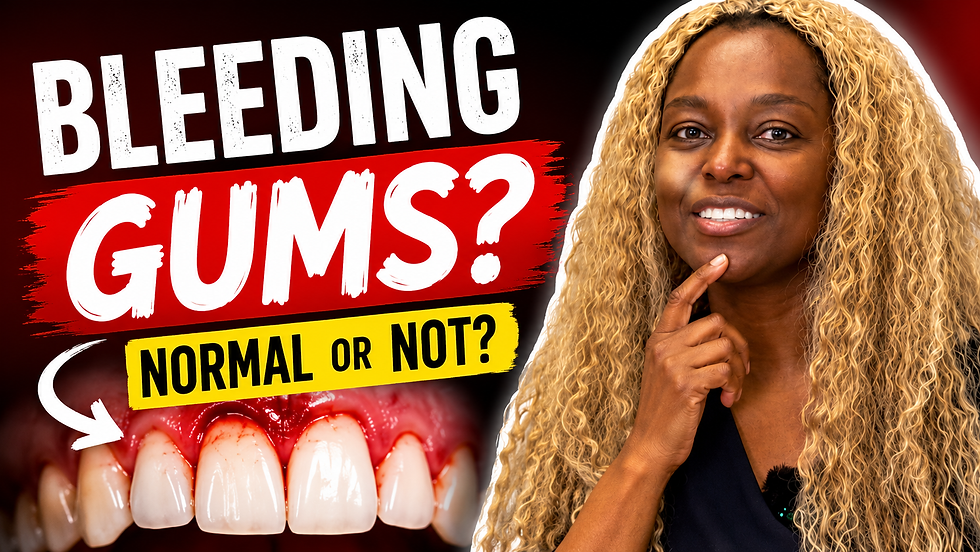
Watch the full video on our YouTube channel. Like, subscribe, and drop your questions in the comments. To book an appointment, Call us at 013 692 8249 or visit Smilez Dental Surgery at Tasbetpark Center, 8 Boekenout Street, Shop no. 3, Witbank.


Comments